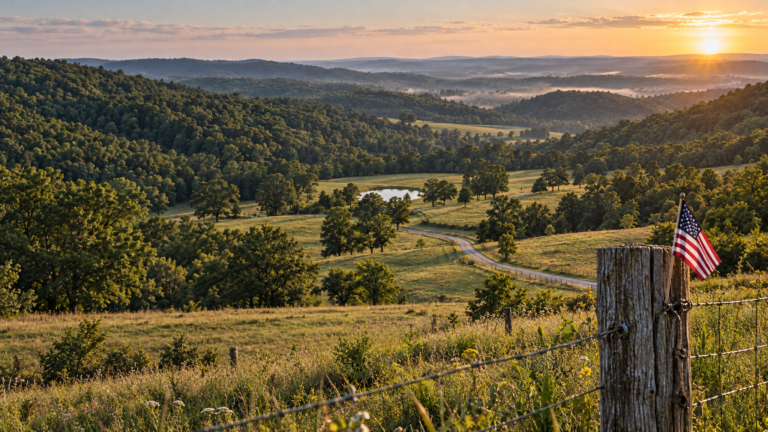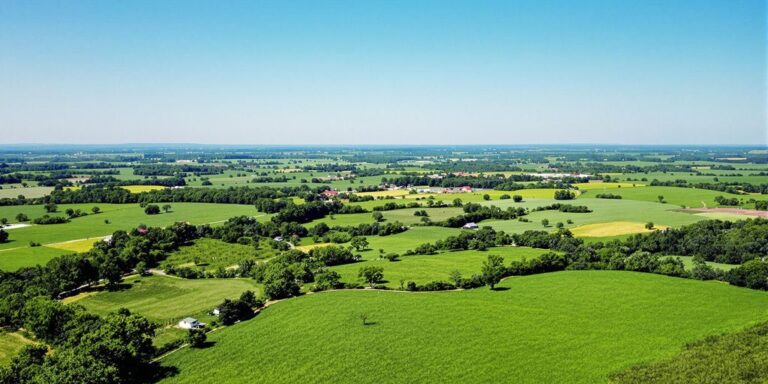
Before you make an offer on land for sale in Hot Springs, Arkansas, confirm five parcel-specific details: legal road access, utility availability (water, sewer, or septic feasibility, and power), terrain and buildable area, restrictions and flood zone status, and clean title. Hot Springs sits in the Ouachita Mountains of Garland County, so slope, rock, and proximity to lakes or creeks can vary from one lot to the next. Verify each item for the exact parcel, not the neighborhood.
Key Takeaways
- Verify legal road access first. If access depends on an unrecorded agreement with a neighbor, treat the parcel as landlocked until an easement is recorded.
- Walk the land and study the terrain. Ouachita Mountain slope, rock, and drainage can shrink five advertised acres to one buildable acre.
- Confirm water, sewer or septic, and electric availability directly with each provider for the exact address. Never assume service because a neighbor has it.
- Read every recorded restriction. City zoning, Garland County rules, subdivision covenants, and lake shoreline permits can each limit how you use the parcel.
- Pull the official FEMA flood map and order a title search covering liens, back taxes, mineral rights, easements, and heirship gaps. A current survey confirms boundaries and acreage.
- Match your due diligence to your intended use. A homesite, hunting tract, lake lot, or long-term hold each has different deal breakers to check before you make an offer.
Why are buyers interested in land for sale in Hot Springs, Arkansas?
Hot Springs is one of the state’s most recognizable destinations. Hot Springs National Park sits right in town, and Lake Hamilton, Lake Catherine, and Lake Ouachita surround the area. Ouachita National Forest land is a short drive away. That mix draws retirees, second-home buyers, recreational buyers, and people who want acreage with mountain views within a reasonable drive of Little Rock.
From our work as a veteran-owned land buyer across Arkansas, Garland County stands out for how much parcels vary. Two lots on the same road can differ completely in slope, access, and utility availability. That is why a general search for land for sale in Arkansas is only a starting point. Local buyers who do well here treat every parcel as its own project.
What do you plan to use the land for?
Your intended use decides which details matter most. Settle this before you start searching for land for sale in Hot Springs so you do not waste time on parcels that cannot support your plan.
| Intended use | Confirm this first |
| Homesite or cabin | Buildable flat area, septic or sewer feasibility, driveway grade, zoning |
| Recreational or hunting | Legal access, neighboring land uses, hunting rules, seasonal road conditions |
| Lake or water access | Exact shoreline boundary, dock permit rules, flood zone, water level changes |
| Manufactured home | Zoning and covenant restrictions, utility hookups, access for delivery |
| Long-term hold | Property taxes, road maintenance obligations, resale access, title quality |
How should you evaluate location, access, and terrain?
Does the parcel have legal road access?
Access is the first thing we check on any Arkansas parcel, and Hot Springs is no exception. A lot can look accessible on a map and still be landlocked on paper. Ask whether access comes from a public county road, a private road with a maintenance agreement, or a recorded easement across a neighbor’s land. If access relies on a handshake with a neighbor, treat that as no access until it is recorded.
What does the terrain tell you?
The Ouachita Mountains create steep, rocky ground in many parts of Garland County. Slope affects where you can build, how much a driveway costs, and how water moves across the land after storms. Walk the property in person if at all possible. A parcel that appears to be five usable acres online may have only one usable acre once you account for grade, rock outcrops, and drainage.
- Pull a topographic map and note the elevation change across the lot.
- Look for signs of water flow such as washed gullies, debris lines, or standing water.
- Estimate the size of the flat or gently sloped area where a structure could sit.
- Check how far the buildable area is from the road for driveway and utility runs.
- Note tree cover and whether clearing would be required.
Which utilities and services should you verify?
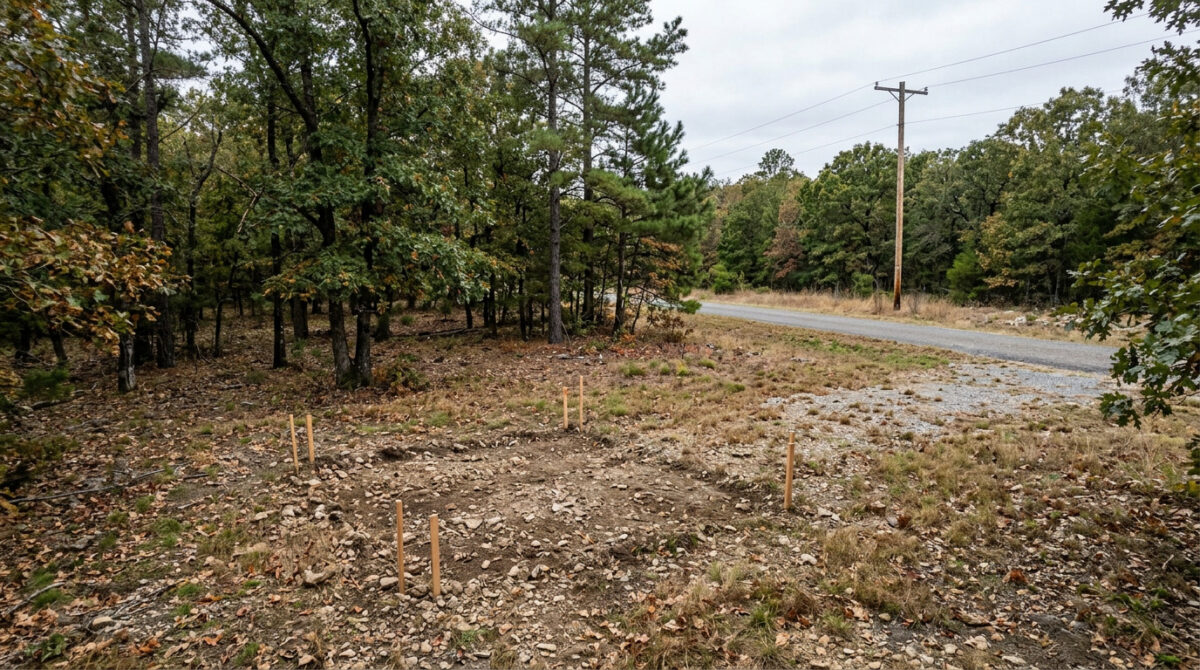
Never assume utilities are available because a neighbor has them. Lines may stop at the property line, or a connection may require a long and costly extension. Confirm each service directly with the provider.
| Service | How to verify | Hot Springs area note |
| Water | Call the city utility or rural water association for the exact address | Some rural parcels rely on wells; ask about depth and yield of nearby wells |
| Sewer or septic | Confirm city sewer availability or request a septic site evaluation | Rocky or shallow soil may require an alternative system at higher cost |
| Electric | Ask the local electric provider about the nearest pole and extension cost | Mountain parcels can sit far from existing lines |
| Internet | Check provider coverage maps and confirm with a neighbor | Service quality varies quickly outside town |
| Fire and road maintenance | Ask the county which entity maintains the road and which fire district applies | Private roads may carry shared maintenance costs |
In Arkansas, the Arkansas Department of Health and its county health units permit septic systems. The department recommends contacting the health unit in the county where the property is located and asking for the Onsite Environmental Specialist. You can read more on the Arkansas Department of Health onsite wastewater page. A septic evaluation before closing is one of the best investments a land buyer can make.
What restrictions, flood information, and title issues should you review?
What rules limit how you can use the land?
Parcels within the Hot Springs city limits are subject to city zoning. Parcels in unincorporated Garland County may have fewer zoning rules but can still be subject to recorded subdivision covenants or property owners’ association requirements. For example, Hot Springs Village operates under its own association rules. Lake lots add another layer: shoreline work and docks on the area lakes typically require permits from the entity that manages each lake. Read every recorded restriction before you commit.
Is the parcel in a flood zone?
Creeks and low areas near the lakes can flood quickly after heavy rain. Use the FEMA Flood Map Service Center to pull the official flood map for the parcel. FEMA notes there is no such thing as a no-risk zone, so also look at the ground itself for debris lines and drainage paths. Flood status affects insurance, financing, and where you can build.
Is the title clean?
Order a title search and ask specifically about liens, unpaid property taxes, mineral rights, and recorded easements. Arkansas land often passes through generations without a formal probate, so heirship gaps show up more often than buyers expect. A current survey confirms acreage and boundaries. Our land due diligence checklist walks through each of these steps in more detail. You can find Garland County’s official records, office locations, and contact details on the official state page for Garland County.
What questions should you ask before making an offer?
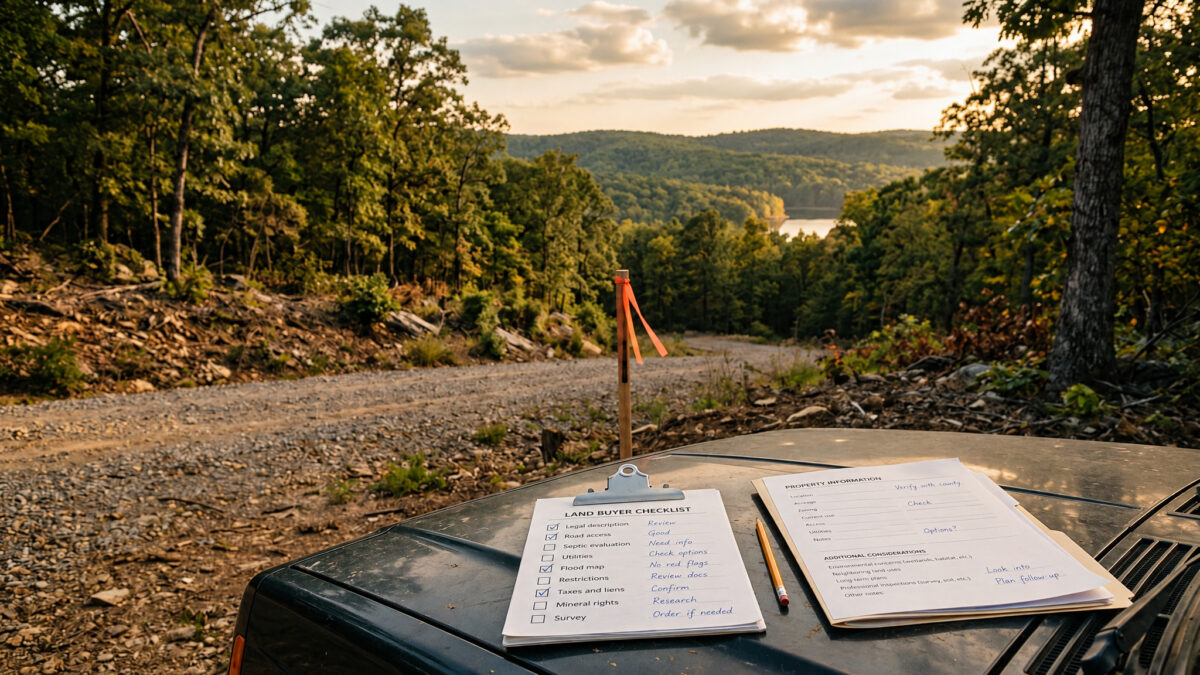
Bring this list to the seller or agent. Clear written answers now prevent expensive surprises later. For a broader walkthrough of the process, see our guide on how to buy land in Arkansas.
1. What is the exact recorded legal description and parcel number?
2. Is access from a public road, private road, or recorded easement?
3. Who maintains the road, and is there a written maintenance agreement?
4. Has a septic site evaluation or perc test ever been done on this parcel?
5. Which water, sewer, and electric providers serve the exact address?
6. Is any part of the parcel in a FEMA special flood hazard area?
7. Are there recorded covenants, association fees, or zoning limits?
8. Are property taxes current, and are there any liens or judgments?
9. Do mineral rights transfer with the surface?
10. When was the last survey completed, and are corner markers visible?
If water access is a priority, our guide to land for sale with water covers how to confirm shoreline boundaries and water rights before you buy.
Frequently asked questions
How do I check if land for sale in Hot Springs, Arkansas, is in a flood zone?
Enter the parcel address or coordinates in the FEMA Flood Map Service Center to view the official flood map. Then walk the property after a heavy rain and ask the seller about any past flooding along creeks or drainage ways.
Can I place a manufactured home on land near Hot Springs?
It depends on the parcel. City zoning, county rules, and subdivision covenants can each restrict manufactured homes. Confirm in writing with the city or county planning office and read the recorded covenants before you buy.
Do I need a survey before buying land in Garland County?
A current survey is strongly recommended. Many rural parcels near Hot Springs have old or missing corner markers, and a survey confirms acreage, boundaries, easements, and any encroachments before closing.
Is water access guaranteed on lake lots near Hot Springs?
No. A lot described as lake view or lake area may not touch the water. Confirm the exact boundary on a survey, and check the lake’s shoreline permit rules before assuming you can build a dock.
Own land in the Hot Springs area and thinking about selling?
Veteran Land Buyers is a veteran-owned Arkansas company that buys land directly from owners across the state, including Garland County. If you hold a parcel you no longer use, an inherited lot, or land with back taxes or access problems, we can review it and make a no-obligation cash offer. Visit our sell my land in Arkansas page or call (870) 533-5263. Se Habla Español.
This article is for general educational purposes and does not constitute legal, financial, or tax advice. Verify all parcel details with the appropriate county, state, and utility offices, and consult a licensed professional for your specific situation.

JP Kilduff is the Co-Founder and Chief Operating Officer at Veteran Land Buyers. He started investing in to real estate and communities in 2016. He has worked with hundreds of families purchasing their unwanted land across Arkansas, South Carolina and Florida. When JP is not buying and selling land you can find him on the local basketball court or playing disc golf.